Emery High uses app to limit student cellphone use: ‘It has been the single most significant change in our school.’
on November 9, 2026
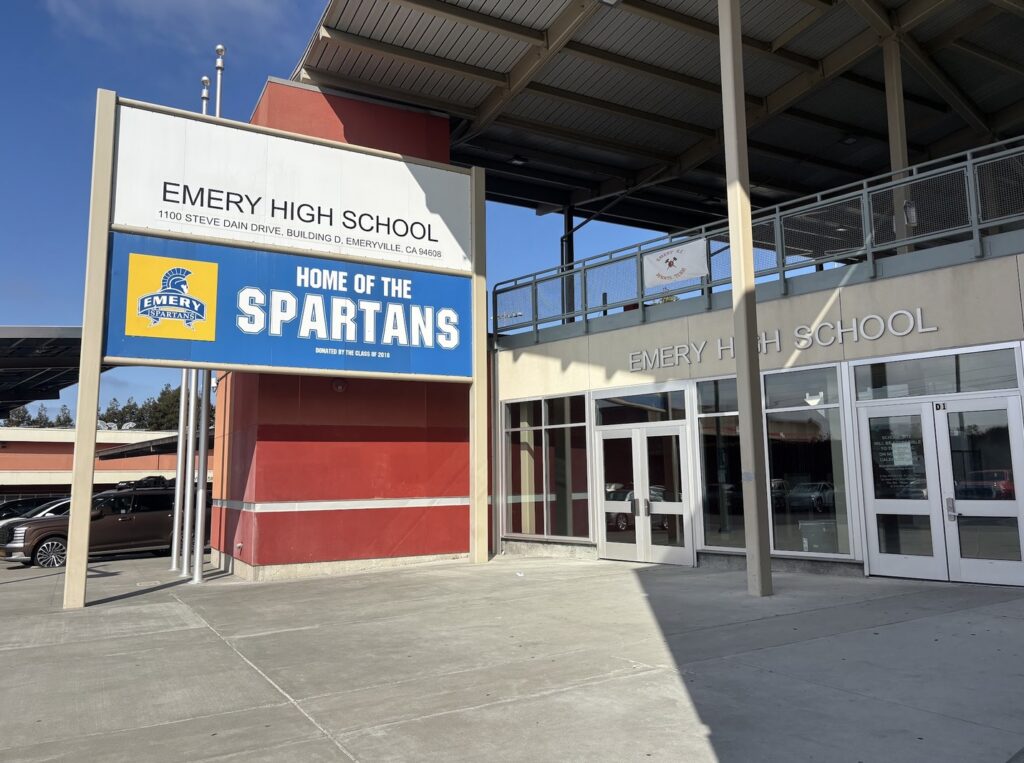
Emery High School is among the few schools in the Bay Area that has decided to comply with California’s new cellphone restrictions by allowing students to keep their phones in their pockets.
Emery High is using CLocked, a software program that restricts access to distracting apps during the school day, instead of collecting devices or requiring students to place them in locking pouches.
Before the policy took effect in July, cellphone use varied across classrooms, according to Makhi Delavallade, an Emery High junior. Some students used their phones to cheat on tests and assignments or for entertainment during class, and some teachers allowed phones during independent work time and study hall.
California’s Phone-Free School Act, passed in 2024, requires school districts to adopt policies that limit or prohibit student smartphone use. The law leaves it up to school districts to determine how to implement those restrictions.
At Emery High, students now begin their day by scanning a QR code through the CLocked app, which restricts most apps until the school day ends at 3:25 p.m. Students can still access their phone’s settings, make phone calls and use school-approved apps like the learning management platform Canvas, but social media and other distracting apps remain unavailable.
Emery High Principal Kibby Kleiman said the school considered other approaches, including locking pouches and hard plastic cases. But those alternatives presented a challenge for a small school with limited staff. Unlike these other approaches, which require staff to physically unlock students’ phones, CLocked allows students to keep their devices while still restricting access to distracting apps. This eliminates the need for staff to collect, unlock or monitor phones throughout the school day, making it a more practical and less hands-on option for a small school like Emery High.
“This is a school run by a single administrator, myself, my office manager, and one security,” Kleiman noted.
CLocked was created by UCLA undergraduates Samythua Ayalasomayajula and Kyle Soriano, who said their experiences with cellphone restrictions in high school inspired them. They set out to create software that would let students keep some access to their devices without disrupting classroom learning.
“We knew that technology existed to restrict the phone,” Soriano said. With physical restrictions, “the student loses the phone. The parent loses access to their child,” he said, and teachers have to be “the phone police.”
New software, new approach
Kleiman had been exploring ways to reduce cellphone use when Soriano contacted him while the company was still getting started.
“I had no product. We had no team,” Soriano said. “We were just trying to figure out what it is, what is the problem that we’re trying to face here.”

Emery students and staff tested the software for a day last spring. Kleiman and his staff later decided to adopt it for the 2026-27 school year, with the school paying a one-time $1,500 implementation fee and $3,000 for an annual contract. The partnership has also made staff and students part of the product development process, as one of the six schools using this software, Soriano said.
During the trial, students discovered ways around the restrictions, including changing the time zone on their phones. Kleiman suggested changes to the software. When he found it difficult to distinguish between students who clocked in on time from those who scanned later, he asked CLocked to add time stamps. The developers obliged.
“A lot of feature feedback is really helpful for us to gain perspective on how teachers and administrators want to use this, and what’s useful for them,” Ayalasomayajula said.
The software has become part of the school’s daily routine. According to Kleiman, about 85% to 90% of students clock in regularly. Students who cannot or choose not to use the app are required to leave their phones in his office.
Kleiman said he typically holds eight to 10 phones each day. He tracks this each morning, checking which students have clocked in on his administrative portal, and follows up with those who have not. That can mean going from classroom to classroom to find students who still need to scan the QR code.
“It’s a time suck, but it’s worth it,” Kleiman said. “It’s worth seeing the kids not on their cellphones.”
Makhi, the junior, said he has noticed a change.
“During free time, I cannot lie, students like myself have been connecting and interacting with each other way more often,” he said. “I do believe that CLocked has improved the environment of classes and the connections between students. I would rather have CLocked than those pouches.”
Instead of spending lunch and passing time in between classes on their phones, Kleiman said, students are talking to each other, playing basketball and spending time together.
“It has been the single most significant change in our school in the time that I’ve been here,” he said. “To go from the wild west with cellphones, individual teachers trying to enforce it individually, to having a schoolwide solution to the problem.”
Five vie for three seats on Emery Unified School District board

Emeryville Today welcomes comments from our readers, but we ask users to keep all discussion civil and on-topic. Comments post automatically without review from our staff, but we reserve the right to delete material that is libelous, a personal attack, or spam. We request that commenters consistently use the same login name. Comments from the same user posted under multiple aliases may be deleted. Emeryville Today assumes no liability for comments posted to the site and no endorsement is implied; commenters are solely responsible for their own content.